What manual entry really costs
Registering one guest by hand takes three to five minutes on average. At twenty arrivals a day that is over an hour spent purely on typing.
The errors matter more. A misspelt surname or one wrong character in a phone number resurfaces later in reports, in payments, and when you try to recognise a returning guest.
How it works
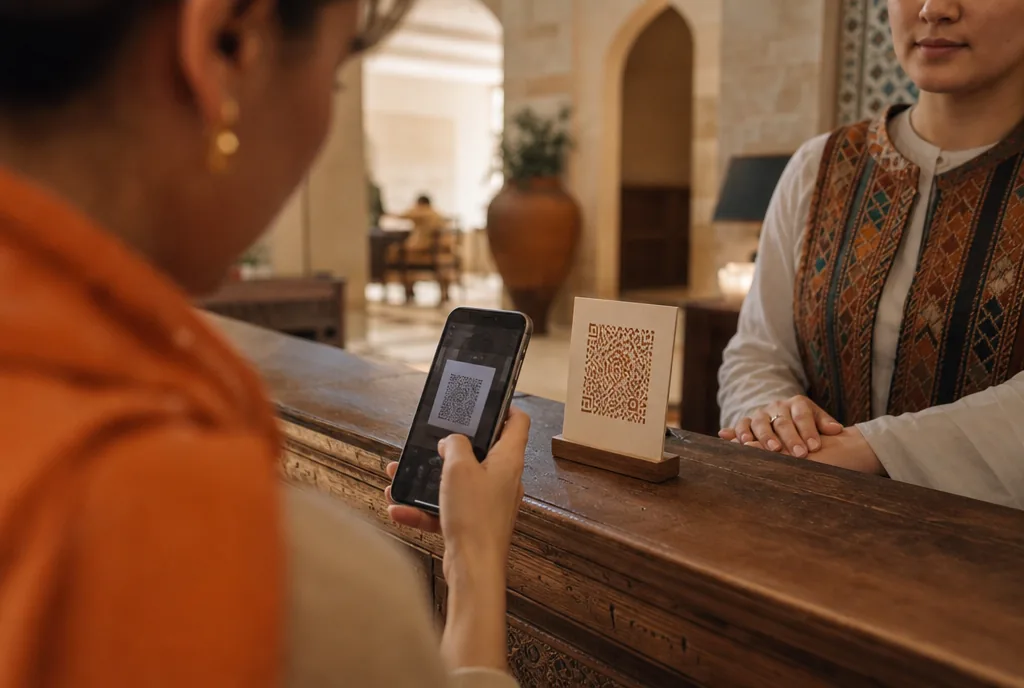
The guest scans a QR code at the desk with their phone and fills in their own details. The information lands directly in the system, and staff only verify and confirm.
The employee's role changes: instead of typing, they talk to the guest. That is the part the guest remembers.
Rolling it out: five steps
- Put the QR code on the desk and at the entrance — guests can fill it in while waiting
- Shorten the form to the fields you genuinely need
- Add the QR link to your booking confirmation message so guests complete it en route
- Give staff one rule: if the form is complete, verify the document and confirm — nothing else
- Keep both methods running for the first week — never force a guest who is not comfortable with it
On data protection
The guest is entering personal data and should understand where it goes. The form should open under the hotel's own name, run over HTTPS, and ask only for what is needed.
Not asking for extra fields is itself a security measure: data you never stored cannot be lost.
What to measure
Two numbers are enough to tell whether the change worked: average check-in time per guest, and the share of forms completed via QR.
In the first month the QR share is typically 40–60%. Even that noticeably lightens the load on the front desk.
The result
QR check-in is not expensive technology — it is a change in how the desk works. Staff become hosts rather than typists, and the guest ends up in their room rather than in a queue.
See QR check-in live